
• Skip to main content
  • Skip to primary sidebar
HAHosting Logo. Four Blue Squares. Blue text HA, Grey Text Hosting as a single word

Call Us Today 0114 228 0022

Status Page   |  Client Login   |  Support Ticket   |  Downloads

Call Us Today
0114 228 0022

Hosting

The Benefits of UK Single Server Colocation

30/10/2019 by Chris Allen Leave a Comment

Single-server colocation, putting your own server hardware in a data centre cabinet rented by the U, sits in a useful middle ground between full-rack colocation and managed cloud hosting. For the right workload it is the most cost-effective and predictable option you have. Here are the practical benefits.

1. You own the hardware

Cloud hosting bills you forever for compute you use. Colocation bills you for space, power and network only. After 18 to 24 months of cloud spend you have usually paid for an equivalent server outright, but in colocation you still own it. For long-lived workloads this is dramatically cheaper over a typical four to five year hardware lifecycle.

2. Predictable monthly cost

One server, one slot, one monthly invoice. No autoscaling bills, no surprise egress charges, no per-IOPS storage costs. Our Single Server Colocation starts at £52.50 per month with A+B power redundancy and a sensible bandwidth allowance included.

3. Full control of the stack

Your hardware, your operating system, your hypervisor (if any), your application. No multi-tenant noisy neighbour. No cloud provider’s idea of how your workload should be scheduled. If you need to install a specific Linux kernel or run an older Windows Server build for a vendor compliance reason, you can.

4. UK data sovereignty

Your data lives in our ISO 27001 Sheffield data centre. UK-resident, UK-managed by our own engineering team, no AWS region puzzles, no overseas hops. For GDPR, ICO compliance, and any sector with data residency requirements (finance, healthcare, public sector), this matters and can be evidenced.

5. Real physical security

24/7 access by prior arrangement, photo ID at reception, visitor log, internal CCTV, locked cabinets. ISO 27001 certified facility with annual audits. Worth knowing what you are getting for the security spend.

6. Tier 1 network

Multiple Tier 1 carriers, BGP peering, low latency to UK ISPs. Standard ports unmetered with no 95th-percentile billing tricks. Add cross-connects to other carriers if you have specific peering needs.

7. Remote hands when you need it

Most issues do not need you physically on-site. Our engineers can swap a drive, power-cycle a server, check a cable or attach a crash cart console under remote hands. The first 30 minutes per month are typically included in single-server contracts; further work is billed in 15-minute increments.

8. Room to grow

Start at 1U, expand to 2U or 4U as needed, then move to a Quarter Rack when you need three servers or more. The same data centre, same network, same engineering team. No platform migration needed when you scale up.

9. Hardware refresh is on your timeline

Cloud forces you onto whatever generation the provider has deployed. With your own hardware you refresh on a schedule that suits your tax treatment and your application lifecycle. Three-year-old kit you still trust can keep paying for itself in colocation, where in the cloud the equivalent instance type would have been deprecated and re-priced multiple times.

Where it does not fit

Single-server colocation is not the right answer if your workload is bursty (cloud auto-scaling earns its premium for spiky traffic) or if you do not want to own and operate hardware at all (use our Virtual Servers instead). For everything in between, especially long-lived production workloads with predictable resource needs, single-server colocation is hard to beat on price.

Pricing summary

From £52.50 per month for 1U, our Single Server Colocation in our UK Sheffield data centre. No setup fees, monthly contracts. Free remote hands on the first 30 minutes per month per contract. Talk to us about your hardware spec and we will size and quote the same working day.
Filed Under: Blog Tagged With: Colocation, Hosting, Server

Website Performance & Optimisation

06/09/2019 by Chris Allen Leave a Comment


Website Performance & Optimisation

We all know that currently, a good website is key to online success. Your website’s performance and how well it ticks those SEO boxes can greatly increase traffic flow and engagements.


Website Optimisation

Website optimisation is about making your website work as efficiently as possible. This could be about having neat, efficient code or compressing images/video into the right format to reduce file sizes.

But why should you care about this?

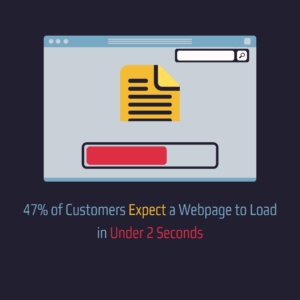
Well the more optimised your website is, the faster it will work and load pages. This is key nowadays as the average person online expects a website to load in only 2 seconds! (We’ve got a blog on that if you want to know more). Furthermore, faster websites generally attract more traffic and convert more too.

47% of customers expect a website to load in 2 seconds graphic

How do you measure this?

There are plenty of tools available to check your website’s optimisation.

We’ve found Google’s PageSpeed Insights tool to be very effective – with a bonus that it’s completely free! All you need to do is enter your website address and it’ll do all the rest.

Aiming for ‘100’

Google’s PageSpeed Insights gives your website a score out of 100 for both mobile and desktop optimisation. Having a site be ‘100’ is the goal for everyone, however, it’s not the be-all and end-all for having a fast website…


Website Performance

Website Performance is a general term used for how ‘good’ a website is. Typically, this is based on the speed and responsiveness of your website. And while optimisation can make a difference to your site’s speed, you don’t necessarily have to have an optimised site for it to be fast.


A different kind of speed

As you may know, websites need to be ‘hosted’ on a platform of some kind to run.

This could be shared hosting, a private server or many other options. Each of these have they’re own pros and cons, with varying costs and performance. So why is this relevant? The platform your website is hosted on can make a dramatic difference to how fast your website loads.

You could have a very poorly optimised site score but still, have a lightning-fast website. This is because the infrastructure powering your site pulls up some of the slack.

How can you measure this?

There are various ways of measuring this speed. We particularly like GTMetrix. This one is free so that’s another bonus.

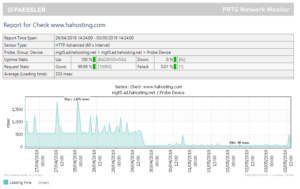
If you pay someone for hosting, they should be able to give you detailed reports of your site’s current performance. We do this with the Hosting we provide, which is how we get detailed reports. Like with the ones you can see when we made our site 10x Faster!

If nothing else, it’s reassuring to see how your site is performing – especially if you have a lower Google page score.

WordPress speed improvement graph
Our Website Performance Report


Which Is Better?

Unfortunately, there is no clear-cut answer to that one.

In an ideal world, you would have both be as best they can be. However, that would be both expensive and time-consuming. Here is a quick pros/cons summary of both.

Web Optimisation

Pros:

  • Boosts SEO ranking
  • Google ‘likes’ a high Google score
  • Looks good to customers if they check it
  • Improve speed

Cons:

  • Could be a long list of fixes
  • Fixes can be time-consuming & require regular maintenance
  • Can be expensive if you pay a web developer


Web Performance (Hosting)

Pros:

  • The immediate impact on site speed
  • Can make a significant difference
  • Simple if you’re buying hosting

Cons:

  • Must pay a monthly fee
  • Performance can vary depending on the amount spent (depends on provider)
  • Doesn’t improve Google score so can make your site look worse than it is


Our Recommendation

If you want our honest opinion, the easiest way to improve website speeds is to improve your website hosting.

It’s often inexpensive for smaller websites and whoever you sign up with should sort out the technical details needed to move your site. Easy.

If you’re looking for a faster WordPress site, you can find out a bit more on our Fast WordPress Hosting page 😉.

Of course, we also recommend improving the optimisation on your site, as this will help in the long run! However, if you’re looking for an instant and substantial improvement, upgrading your hosting is the better option.

Filed Under: Blog Tagged With: Hosting, Information, SEO, Website, WordPress

Fast WordPress Hosting Speed: How HA Hosting Is Built for It

27/06/2019 by Chris Allen Leave a Comment

WordPress hosting speed is not a vanity metric anymore. It directly affects Google’s Core Web Vitals scoring, conversion rate, and the bounce-back-to-search behaviour that quietly drops your rankings. If your hosting stack is fighting you on every page load, no amount of theme optimisation will rescue it.

Here is what actually makes hosting fast, and how we build for it at HA Hosting.

What makes WordPress hosting fast

Four layers, all of which have to be quick or the slowest one becomes your ceiling.

Storage. The disk your WordPress files and database sit on sets the floor for everything else. Spinning disks (HDD) are a non-starter at 100 to 200 MB/s. Mainstream SATA SSDs come in around 500 MB/s. NVMe-class storage is several times faster again. We run an all-flash Ceph cluster in our Sheffield data centre, which gives every customer NVMe-class read and write performance plus self-healing redundancy across multiple physical hosts.

Network. Your hosting can only serve data as fast as the link out of the data centre allows. We run a 10 Gbit Ethernet LAGG between every compute node and our Ceph cluster, so storage traffic never bottlenecks behind public internet traffic. Externally, we peer with multiple Tier 1 carriers to keep round-trip times down for UK visitors.

RAM and CPU. WordPress is PHP, and PHP is hungry. Underprovisioned RAM forces the server to swap to disk, instantly killing speed regardless of how fast your SSD is. We provision generous RAM by default and use modern Intel Xeon cores rather than recycled hardware. Our Pro VPS plans run on HP servers with Proxmox and KVM virtualisation, no overcommit on CPU.

Caching. Even with fast hardware, serving every visitor a freshly-rendered WordPress page is wasteful. WP Rocket caching plus Cloudflare CDN means most visitors get a pre-rendered HTML page from an edge server within milliseconds. Both are included on our Fast WordPress Hosting plans.

What you measure to know your hosting is fast

Forget Time To First Byte in isolation. Look at three numbers in PageSpeed Insights:

  • LCP (Largest Contentful Paint). Under 2.5 seconds is good. If yours is 5 seconds or worse on mobile, hosting is usually a contributing factor.
  • TTFB (Time To First Byte). Under 600 ms is good. Above 1.5 seconds points squarely at hosting.
  • FCP (First Contentful Paint). Under 1.8 seconds. Cloudflare edge caching dramatically improves this.

What we do differently

Our Fast WordPress Hosting stack is built around the four layers above. All-flash Ceph storage, 10 Gbit internal network, generous RAM, no CPU overcommit, plus WP Rocket and Cloudflare on by default. We run it from our own ISO 27001 Sheffield data centre, so when something needs investigating, you are talking to the engineers who own the stack, not a ticket queue in another timezone.

Plans start at £20 per month with no setup fee and monthly contracts. If you want a benchmark before committing, we are happy to run your existing site on a trial environment and share the before-and-after PageSpeed numbers.

Filed Under: Blog Tagged With: Fast WordPress Hosting, Hosting, Website, WordPress

Primary Sidebar

Categories

  • Blog (45)
  • HA Hosting Guides (11)
  • HA Hosting News (11)
  • HA Hosting Technical Blog (11)
  • Updates (20)

Recent Posts

  • What’s the Best Data Centre for a UK Small Business?
  • Why Virtual Servers Make Scaling a Business Easier
  • Downtime Management
  • Colocation Hosting – How to Save Money
  • What is Single Server Colocation Hosting?

Online Backup

Colocation

Virtual Servers

Telecoms

Contact

High Availability Hosting Limited
Holbrook Close, Sheffield, South Yorkshire, UK S20 3FJ

© 2026 High Availability Hosting Ltd. All Rights Reserved.
Company Registration No. 6491361   |   VAT Registration No.  928954962 | All Prices Subject to VAT

We use cookies to understand how visitors use our site so we can improve it. By continuing to browse you agree to this. See our privacy policy for details.